
How to Plan Yacht Crew Provisioning: A Complete Guide
While guest comfort and satisfaction are often the main priorities in yacht charter operations, another essential aspect can sometimes receive less attention: yacht crew provisioning.
Captains, chefs, deckhands and other crew members work long hours and follow demanding daily schedules throughout the charter season. Regular, balanced and sufficient meals are therefore important for meeting their everyday nutritional needs.
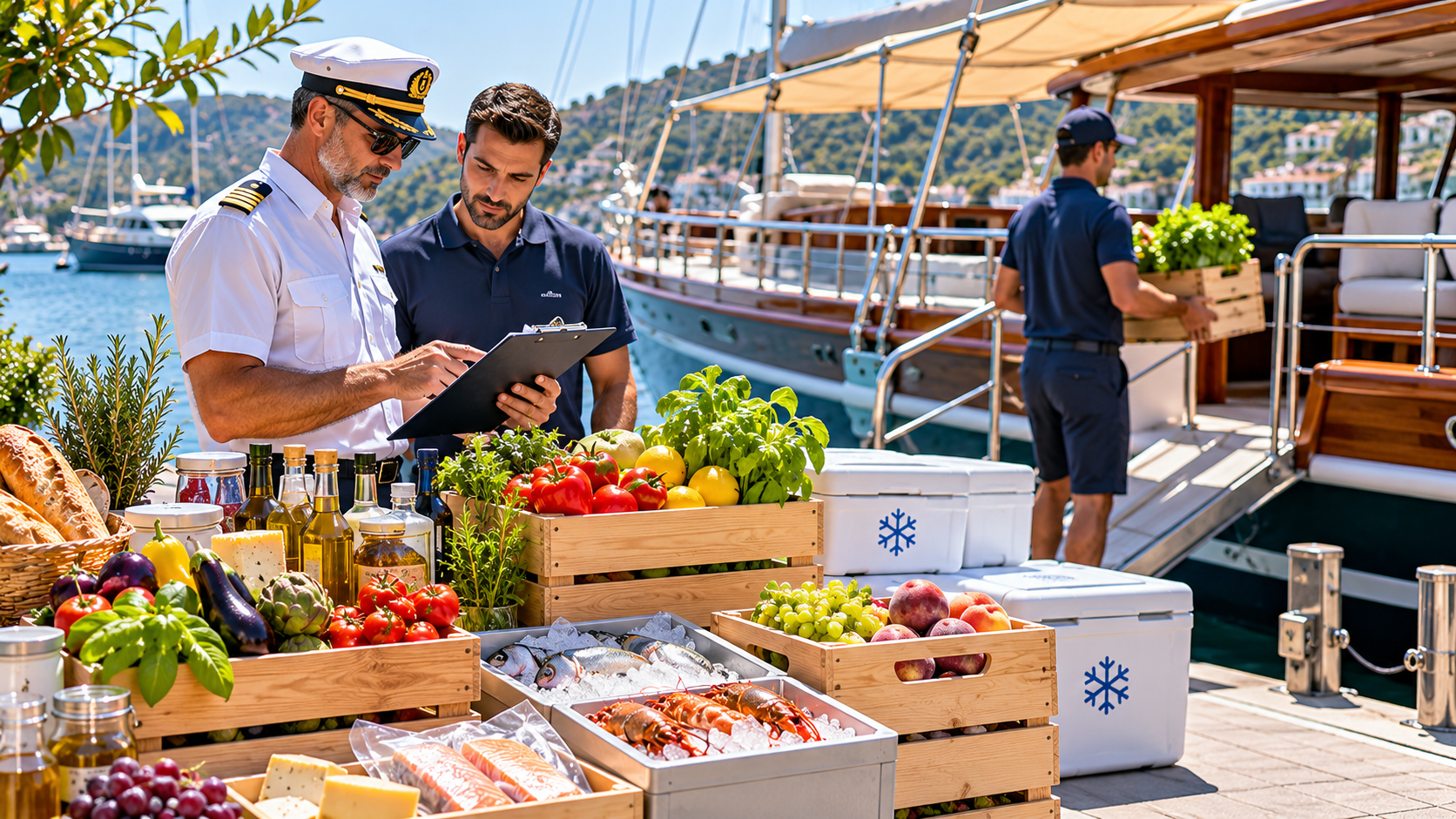
Professional crew provisioning and yacht food supply management involve much more than purchasing groceries for the crew. The process requires sourcing the right products, in the right quantities, within an appropriate budget and delivering them to the yacht at the agreed time.
So, how should yacht crew provisioning be planned, and what should captains and yacht management companies consider?
1. The Difference Between Guest and Crew Provisioning
In yacht charter operations, guest menus are generally designed around personal preferences, special requests and the overall dining experience.
Crew provisioning, on the other hand, focuses more on daily nutritional needs, working schedules, practical meal preparation and sustainable budget management.
However, this does not mean compromising on food quality for the crew.
A well-planned crew menu should provide nutritious, varied meals that suit the crew's daily working routine.
Preparing separate provisioning lists for guests and crew can also simplify stock monitoring and cost management.
2. Weekly Provisioning Based on Crew Size
The daily food requirements of a four-person crew will naturally differ from those of a team of ten.
When preparing a weekly crew provisioning list, the first step is to determine the number of crew members, charter duration and daily meal schedule.
For example, a seven-day provisioning plan for six crew members can be calculated as follows:
Breakfast: 6 people × 7 days = 42 individual meals
Lunch: 6 people × 7 days = 42 individual meals
Dinner: 6 people × 7 days = 42 individual meals
This represents a total of 126 individual meals across three daily mealtimes.
However, this calculation alone is not sufficient to determine the exact quantities of food required.
Portion sizes, planned menus, snacks, dietary preferences and existing onboard stocks must also be considered.
3. Balanced Nutrition and Crew Working Schedules
Daily working routines on board can be physically demanding, especially during the busy yacht charter season.
Deck operations, cleaning, guest services, galley preparations and navigation duties involve different levels of physical activity.
For this reason, crew menus should include a balanced variety of protein sources, vegetables, fruit, whole grains and other essential food groups.
Eggs, cheese, yoghurt, legumes, meat, chicken, fish and seasonal vegetables can be incorporated into different meals throughout the week.
Ensuring an adequate supply of drinking water and coordinating meal times around crew shifts are equally important.
Practical Tip: Meals that can be prepared efficiently, planned in advance and stored safely can help simplify daily crew operations during busy working periods.
4. Stock Management During Extended Voyages
Storage capacity on board is limited. Therefore, yacht crew supplies and provisioning planning should take product shelf life and storage requirements into account.
Dry goods such as rice, pasta, legumes and canned products can generally be stored for longer periods under suitable conditions.
Fresh vegetables, fruit, dairy products and meat require different storage arrangements.
Effective stock management should include the following:
Check existing onboard provisions before placing a new order.
Monitor expiry and use-by dates regularly.
Organise stock to support a first-in, first-out rotation system.
Store temperature-sensitive products under appropriate conditions.
Avoid exceeding the yacht's refrigeration, freezer and dry storage capacity.
Good stock management helps reduce unnecessary expenditure and minimise food waste.
5. How to Manage the Crew Provisioning Budget
Crew provisioning is a recurring operational expense throughout the yacht charter season.
For this reason, budgeting should consider not only the total value of individual orders but also the daily cost per crew member and weekly consumption levels.
When planning yacht provisioning budgets, choosing seasonal products, suitable packaging sizes and appropriate portion quantities can provide practical advantages.
However, the lowest-priced products are not necessarily the best choice.
Food quality, nutritional value, product safety and overall cost should be evaluated together.
Regular inventory checks and advance weekly shopping lists can also make provisioning expenses more predictable.
6. Fresh Provisioning Along Bodrum, Göcek and Marmaris Routes
In popular yacht charter destinations such as Bodrum, Göcek, Marmaris and Fethiye, yachts may visit different marinas, harbours and bays throughout their itineraries.
During extended charters, loading all fresh products at the beginning of the journey may not always be the most efficient solution.
This is where top-up provisioning becomes valuable.
Fresh vegetables, fruit, dairy products and other daily crew essentials can be replenished at suitable intervals during the voyage.
For example, a yacht beginning its journey with Bodrum yacht provisioning may arrange additional supplies and marina deliveries in Göcek, Marmaris or Fethiye, depending on its itinerary.
Delivery locations and schedules should always be coordinated in advance, taking into account the yacht's route, marina regulations and product availability.
7. Coordination Between the Captain, Chef and Provisioning Supplier
Successful crew provisioning begins with effective communication.
The captain or crew member responsible for provisions should review existing stocks and identify requirements for the coming days.
The onboard chef should prepare a detailed ingredient list based on planned meals and required quantities.
A professional yacht provisioning supplier can then assist with product sourcing, communicating alternatives and coordinating deliveries.
Especially during the busy charter season, preparing orders in advance and maintaining regular communication can help reduce last-minute requirements.
Well-Planned Crew Provisioning Supports Efficient Yacht Operations
Regular and balanced meals for crew members are not simply a daily necessity. They are an important part of successful yacht operations.
Through appropriate product selection, weekly meal planning, effective stock management and timely deliveries, crew requirements can be met while provisioning budgets are managed more efficiently.
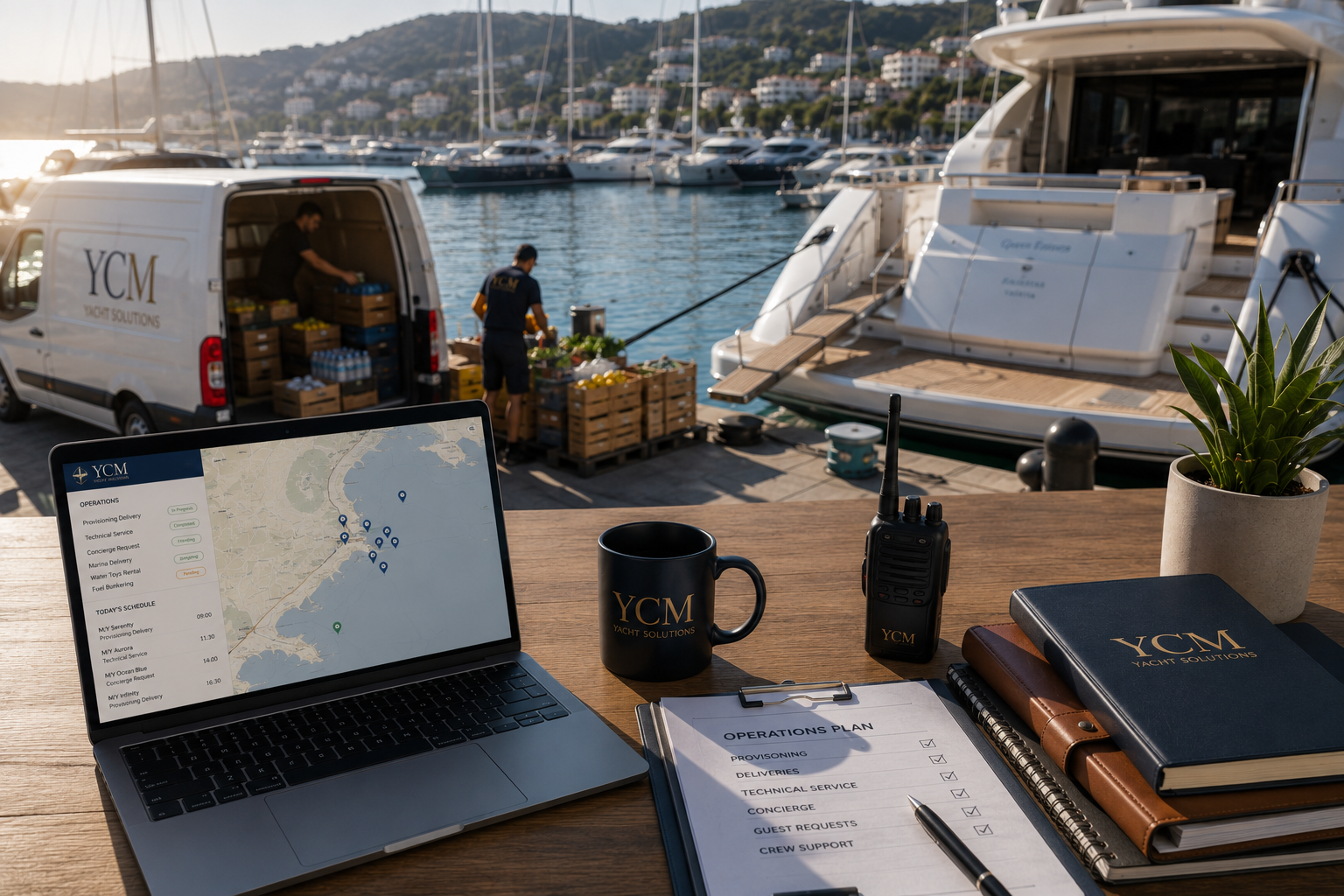
YCM Yacht Solutions, based in Bodrum, provides yacht provisioning, crew provisioning, yacht supplies and marina delivery services across Bodrum, Göcek, Marmaris and Fethiye.
We aim to be a reliable operational partner for captains and yacht management companies by supporting the sourcing and delivery of products tailored to their crew's requirements.
Because a well-organised yacht charter operation begins with taking care of both guests and crew.
Frequently Asked Questions
Should crew provisioning be planned separately from guest provisioning?
Preparing separate lists can make it easier to monitor quantities and costs. However, both guest and crew requirements should be considered together when evaluating the yacht's overall storage capacity.
How do you calculate weekly yacht crew provisioning quantities?
Calculations should consider the number of crew members, voyage duration, daily meals, planned menus and existing stocks. Exact product quantities should be determined according to the recipes and portion sizes.
Can additional crew supplies be delivered during a yacht charter?
Yes. Depending on the yacht's itinerary, product availability and local delivery conditions, additional crew provisions can be arranged through top-up provisioning services.